Introduction to Thai Mango Sweet Sticky Rice
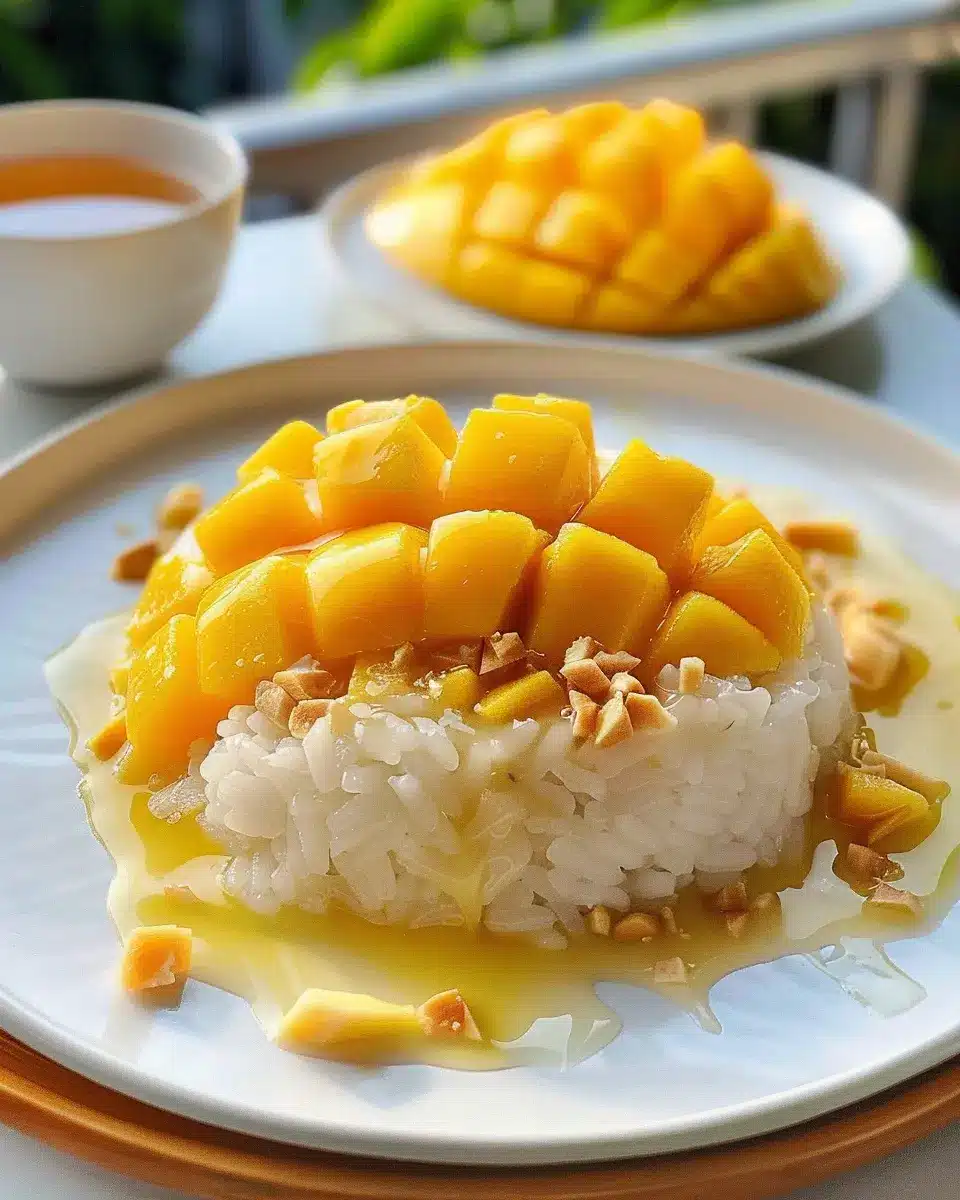
If you have a penchant for dessert that tantalizes the taste buds, then Thai Mango Sweet Sticky Rice is a must-try indulgence. This iconic Thai dish, known as “Khao Niew Mamuang,” combines the creamy richness of coconut milk with the vibrant sweetness of ripe mangoes and the delightful chewiness of sticky rice. It’s a dessert that delights not only the palate but also the eyes, making it a showstopper for any gathering or a cozy night in.
Why Thai Mango Sweet Sticky Rice is a Must-Try Dessert?
Let’s dive into why this dessert deserves a place in your culinary repertoire. For starters, it marries the tropical flavors of Thailand with simple ingredients. You’ll need glutinous rice, fresh mango, coconut milk, sugar, and a pinch of salt. Yes, it’s that uncomplicated! Such ease of preparation means you can whip this up for a last-minute dinner party or a lazy Sunday afternoon treat.
Moreover, this dessert is a feast for the senses. The contrasting textures of the smooth, creamy coconut sauce and the sticky, plump rice are nothing short of heavenly. Each bite brings a balance of sweetness and savoriness—a perfect harmony that speaks to the depth of Thai cuisine. The vibrant colors of fresh mango slices add an aesthetic appeal, making it not just delicious but also beautiful.
Did you know that Thailand grows some of the world’s best mango varieties? According to the Food and Agriculture Organization, mangoes are a nutrient powerhouse rich in vitamins, minerals, and antioxidants. Pairing this with sticky rice means you’re indulging in a dessert that not only pleases your taste buds but also offers some nutritional benefits.
If you’re not already convinced, consider this: making Thai Mango Sweet Sticky Rice at home will save you those awkward moments at cafés trying to savor a piece while resisting the urge to order another. Why not create this culinary delight in the comfort of your own kitchen? Whether you serve it warm or chilled, it’s a versatile dessert that can easily suit any occasion.
So get ready to roll up your sleeves and toast to your own homemade version of this Thai classic! It’s time to experience the flavors of Thailand without boarding a plane!
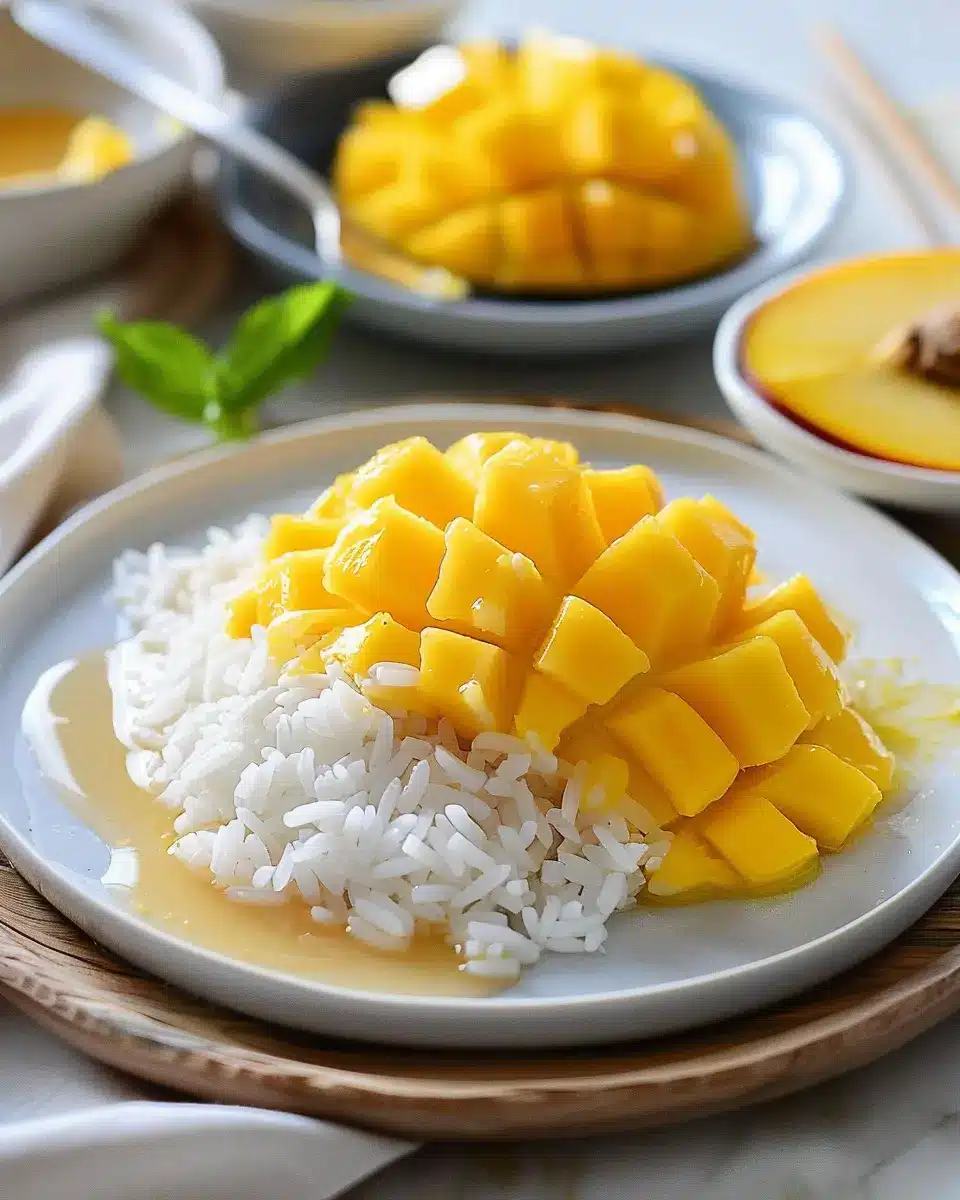
Ingredients for Thai Mango Sweet Sticky Rice
Creating the perfect Thai Mango Sweet Sticky Rice at home is a delightful experience, and it all starts with the right ingredients. Here’s what you need:
Sticky Rice
- 2 cups glutinous rice: Key to achieving that wonderfully chewy texture characteristic of this dish.
Coconut Sauce
- 1 cup coconut milk: Creamy and rich, this is the star of your sauce.
- 1/4 cup sugar: For that touch of sweetness.
- Pinch of salt: Balances the sweetness and enhances the flavors.
Mangoes
- 2 ripe mangoes: Choose the sweetest varieties you can find, such as Nam Dok Mai or Ataulfo, for an authentic experience.
Garnish
- Sesame seeds or mung beans: Optional, but they add a nice crunch and visual appeal.
All these ingredients combine to create a delicious harmony of flavors and textures. Remember to choose ripe mangoes as they’ll provide the perfect sweetness to complement the sticky rice. Looking for ideas on how to choose the best mangoes? Check out this mango guide from Healthline for some tips!
Once you have everything in place, you’ll be well on your way to enjoying this scrumptious Thai dessert. What are you waiting for? Let’s get cooking!
Preparing Thai Mango Sweet Sticky Rice
If you’ve ever wondered how to create the perfect Thai Mango Sweet Sticky Rice, you’re in for a delightful journey. This iconic dessert, known as “Khao Niew Mamuang,” beautifully marries the rich flavors of coconut with the lusciousness of ripe mangoes. Let’s take this step-by-step to ensure your dish turns out amazing.
Gather your ingredients
Before diving into this culinary adventure, it’s important to gather all your ingredients. Here’s what you’ll need:
- 1 cup of glutinous (sticky) rice
- 1 and 1/2 cups of coconut milk
- 1/2 cup of sugar
- 1/4 teaspoon of salt
- 2 ripe mangoes, peeled and sliced
- Sesame seeds or mung beans for garnish (optional)
As you prep your ingredients, think about where you might find some of these items. Your local Asian grocery store is an excellent resource for glutinous rice and coconut milk.
Soak the glutinous rice
The first step on your path to Thai Mango Sweet Sticky Rice perfection is soaking the glutinous rice. This process is essential to ensure the rice cooks evenly and achieves that delightful sticky texture.
- Rinse the rice under cold water until the water runs clear. This helps remove excess starch.
- Place the rinsed rice in a bowl and cover it with water. Let it soak for at least 4 hours, or ideally overnight. If you’re tight on time, a 30-minute soak will suffice, but the longer, the better.
Soaking not only helps the rice cook well, but it also enhances the overall taste of your dessert. While you’re waiting for the rice, why not take a moment to relax and dream about the deliciousness to come?
Steam the sticky rice
Once your rice has soaked sufficiently, it’s time to steam it. Steaming is a traditional method that keeps the grains intact and enhances their natural flavor.
- Drain the soaked rice and place it in a bamboo or metal steamer lined with cheesecloth.
- Steam the rice for about 30-40 minutes, or until it becomes translucent and tender. If you don’t have a steamer, a heatproof bowl resting on a pot of simmering water will work too.
As the rice steams, the heavenly aroma begins to fill your kitchen, creating anticipation for this lovely dessert. Remember to check occasionally to make sure it’s cooking evenly.
Make the sweet coconut sauce
Now that your rice is happily steaming, it’s time to whip up the sweet coconut sauce that pulls the entire dish together.
- In a saucepan over medium heat, combine the coconut milk, sugar, and salt.
- Stir until the sugar has fully dissolved, and don’t let it come to a boil. The sauce should be warm and syrupy, not overly thick.
This sweet coconut sauce is the crowning glory of your Thai Mango Sweet Sticky Rice. It’s what gives the dish that creamy richness we all crave. If you want to learn more about using coconut milk in desserts, check out this insightful article.
Assemble the dessert
The final step is where the magic happens. Time to create your beautiful bowl of Thai Mango Sweet Sticky Rice.
- Once the rice is done, transfer it to a mixing bowl and add about 3/4 of the coconut sauce, stirring gently to coat the rice evenly.
- To serve, place a generous portion of the sweet sticky rice on a plate or bowl, artfully arrange the mango slices on the side, and drizzle the remaining coconut sauce over the top. Feel free to sprinkle some toasted sesame seeds or mung beans for a crunchy finish.
And there you have it! A stunning, mouth-watering dessert that’s both beautiful and delicious. Enjoy it with friends or keep it all to yourself—it’s that good!
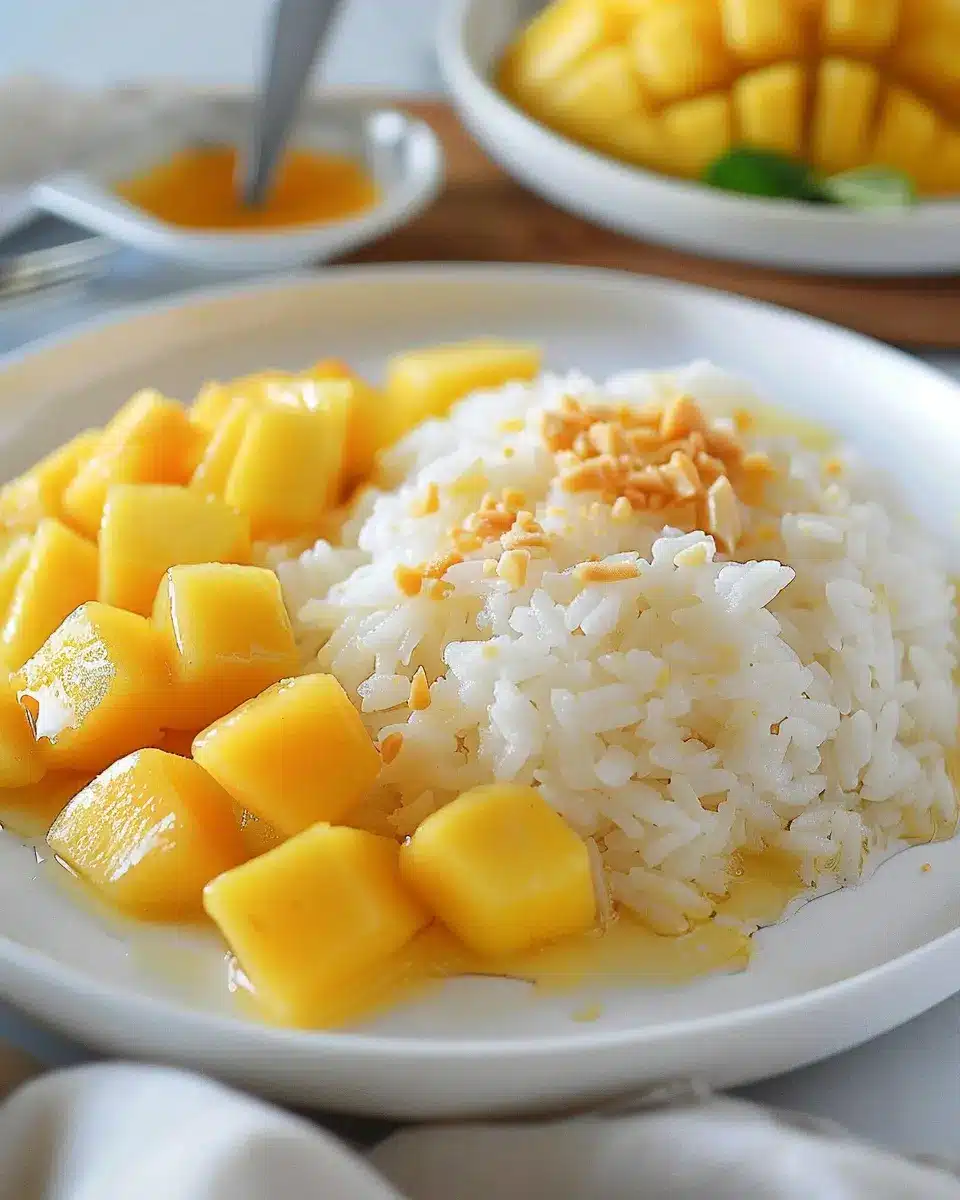
Variations of Thai Mango Sweet Sticky Rice
Thai Mango Sweet Sticky Rice is already a delightful treat, but why not elevate it with some exciting variations? Here are a couple of simple ideas to make this dish uniquely yours!
Explore Flavorful Fruit Toppings
While the classic pairing of mango is irresistible, experimenting with different fruits can add a fun twist to your Thai mango sweet sticky rice. Consider adding:
- Coconut
- Pineapple
- Passion fruit
- Rambutan
Each of these fruits brings its own unique flavor and texture. Imagine the tropical taste of fresh pineapple paired with the creamy coconut milk over the sticky rice. You can even mix several fruits for a vibrant fruit salad on top, making your dessert not only delicious but also visually stunning.
Sweeten It Your Way
Traditional recipes often use sugar or palm sugar, but there are plenty of alternative sweeteners to suit your taste preferences or dietary needs. Here are some popular options:
- Honey or maple syrup for a natural sweetness
- Agave nectar for a low-glycemic option
- Stevia if you’re looking for a zero-calorie substitute
Choosing the right sweetener can enhance the flavors of your Thai mango sweet sticky rice and make it more tailored to your palate. Just remember to adjust the quantities based on the sweetness you desire, especially when using more potent alternatives like stevia.
Unlock new flavors and experience the versatility of Thai Mango Sweet Sticky Rice! For more delicious and creative ideas, check out The Kitchn or Food52, where you can find inspiring twists on traditional recipes.
Cooking Tips and Notes for Thai Mango Sweet Sticky Rice
Creating the perfect Thai mango sweet sticky rice dish is as much about the technique as it is about the ingredients. Here are a few essential tips that will elevate your cooking and impress your friends.
Choosing the Right Rice
Opt for glutinous rice (also called sticky rice) for the authentic chewy texture. Rinse it thoroughly until the water runs clear to remove excess starch, which helps achieve that ideal stickiness.
Timing is Everything
Let the rice soak for at least 4 hours (or overnight). This helps it cook evenly and become perfectly tender. While your rice is soaking, prepare the coconut sauce and allow it to cool. This waiting time can enhance the flavors significantly.
Selecting the Perfect Mango
Choose ripe, fragrant mangos for the best taste. Varieties like Nam Dok Mai or Keo Savoy are ideal, as they balance sweetness with a pleasant texture. Aim for mangoes that give slightly when pressed, indicating ripeness.
Presentation Matters
For a restaurant-quality finish, serve the sticky rice in a mold, topped with mango slices, and drizzled with a coconut sauce. A sprinkle of sesame seeds can add a delightful crunch.
For more insight on ingredients, check out resources from Serious Eats or The Spruce Eats for deeper culinary guidance. Making this dish can turn any meal into a special occasion!
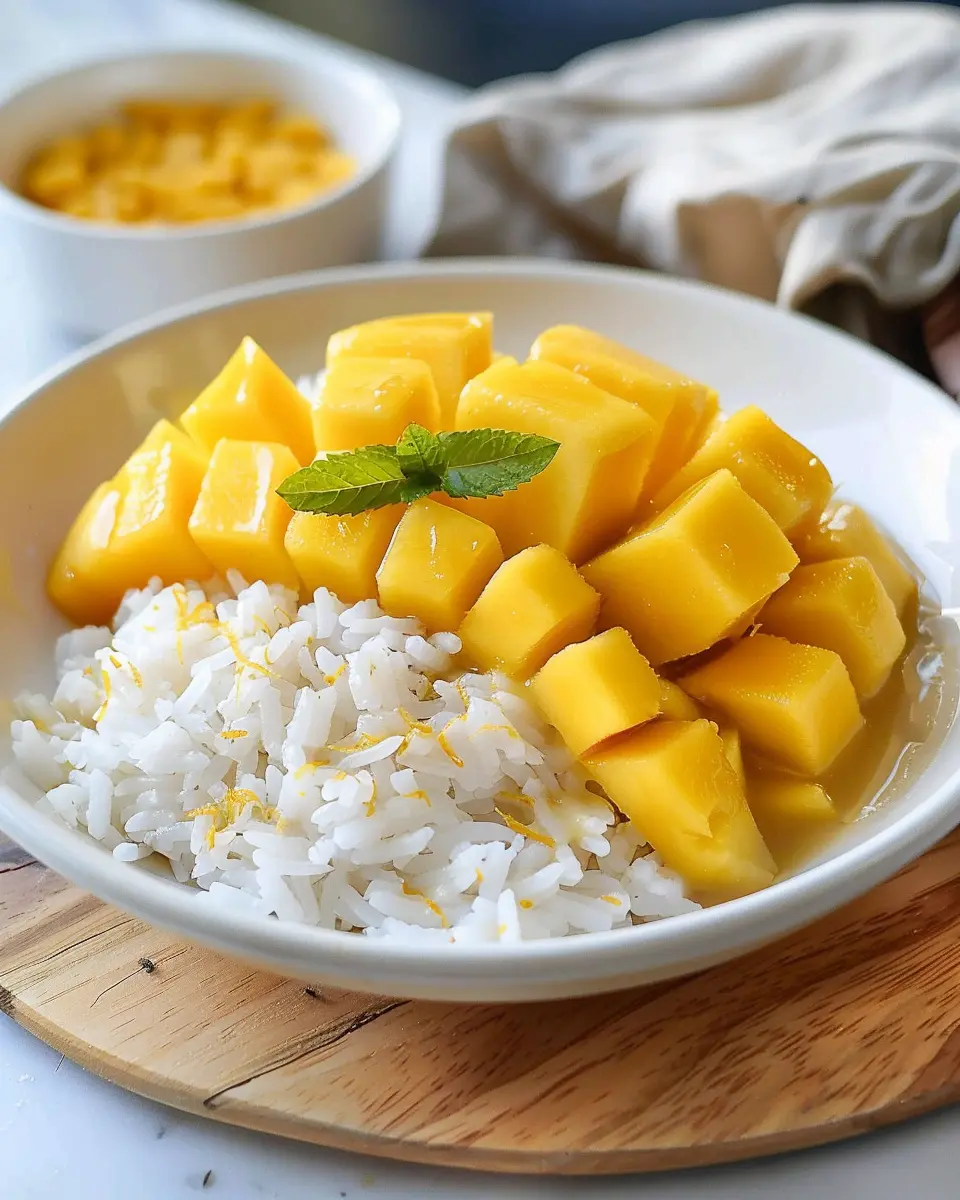
Serving Suggestions for Thai Mango Sweet Sticky Rice
When it comes to enjoying Thai Mango Sweet Sticky Rice, the presentation can elevate your dining experience. Here are some delightful ways to serve your sweet treat:
Serve as a Dessert
After a spicy Thai meal, this sticky rice dish makes a perfect dessert option. The sweetness of the mango pairs beautifully with the coconut flavors in the sticky rice, providing a refreshing finish to your meal.
Pair with Fresh Fruits
Enhance your dish by adding a variety of fresh fruits on the side, like pineapple or strawberries. This not only adds color but also a different texture and additional nutrients. The contrasting flavors will make every bite interesting!
Create a Themed Dessert Table
If you’re hosting a gathering, consider positioning your Thai Mango Sweet Sticky Rice on a themed dessert table. Complement it by including other Asian desserts such as coconut jellies or lychee fruit.
Consider Beverage Pairings
While enjoying this dish, consider serving it with a fragrant tea, like jasmine or oolong. These beverages will enhance the overall experience and provide a calming balance to the sweetness.
Try Serving in Individual Portions
For a more elegant presentation, serve the sticky rice in small cups or bowls. Not only does this make it easier for guests to enjoy, but it’s also visually enticing!
For even more serving ideas, check out Serious Eats for unique twists on popular Asian desserts!
Time details for Thai Mango Sweet Sticky Rice
Preparation time
To kick off your delicious journey into Thai mango sweet sticky rice, set aside about 20 minutes for preparation. This includes washing the sticky rice, slicing the ripe mangoes, and mixing the coconut milk with sugar and salt.
Cooking time
The cooking process will typically take around 30 minutes. You’ll be steaming the sticky rice until it’s perfectly tender and then warming the coconut milk mixture on the stove to create that luscious sauce.
Total time
In total, you’re looking at approximately 50 minutes from start to finish. That’s less time than it takes to binge-watch a couple of your favorite episodes! Just imagine the delightful reward awaiting you at the end—sweet, creamy, and utterly satisfying Thai mango sweet sticky rice. For tips on selecting the perfect mango, check out resources from the California Mango Board here. Additionally, you can find insights on the best sticky rice cooking techniques on Serious Eats.
Nutritional information for Thai Mango Sweet Sticky Rice
When indulging in Thai Mango Sweet Sticky Rice, it’s not just about the delightful flavors; it’s essential to know what you’re enjoying. Let’s break down the nutritional elements of this classic dessert.
Calories
A serving of Thai mango sweet sticky rice typically contains around 250-300 calories. This makes it a satisfying treat without overloading your daily calorie intake.
Protein
While not the primary source of protein, you can expect about 4-5 grams of protein per serving. This slight boost helps add a more rounded nutritional profile to this dessert.
Sugar content
The sugar content in Thai mango sweet sticky rice is approximately 15-20 grams. Most of this comes from the coconut milk and the natural sweetness of the fresh mango, making it a naturally sweet end to your meal.
For more in-depth information about the health aspects of your favorite Thai dishes, check out resources like Nutrition Data for personalized insights. It’s always good to stay informed about what we consume!
FAQs about Thai Mango Sweet Sticky Rice
If you’re new to Thai Mango Sweet Sticky Rice, you might have a few questions swirling in your mind. Let’s dive into some common FAQs to help you whip up this delightful dish with confidence!
Can I use regular rice instead of glutinous rice?
While regular rice may seem like a convenient substitute, it won’t give you the authentic texture and flavor of Thai Mango Sweet Sticky Rice. Glutinous rice, often called sticky rice, is what makes this dessert so special. It has a unique ability to glue together perfectly when cooked, creating that delightful chewy consistency. If you can’t find it at your local store, consider checking out Asian grocery stores or online retailers for authentic options.
How can I store leftovers?
Ah, but who needs to worry about leftovers when the dish is so delicious? If you do find yourself with extra Thai Mango Sweet Sticky Rice, simply cover it with plastic wrap or transfer it to an airtight container. It can be stored in the refrigerator for up to three days. When ready to enjoy, just reheat it with a splash of coconut milk to reclaim that creamy goodness—yummy!
What are good alternatives for mangos?
While ripe mangos are a classic choice for this dish, don’t hesitate to get creative! Other fruits like ripe peaches, avocados, or even strawberries can bring a fresh twist to your Thai Mango Sweet Sticky Rice. If you’re feeling adventurous, try pairing it with warm spiced apples or a drizzle of passion fruit puree for a unique flavor combination!
Whatever variations you choose, remember to savor the experience and share your delicious creations with friends! For more inspiration, check out resources like [Serious Eats](https://www.seriou eats.com) and Just One Cookbook for additional tips and tricks.
Conclusion on Thai Mango Sweet Sticky Rice
In conclusion, Thai mango sweet sticky rice is a delightful dish that beautifully combines the creaminess of coconut milk with the natural sweetness of ripe mango. This dessert not only satisfies your sweet tooth but is also a great conversation starter at gatherings. Whether you’re hosting a dinner party or enjoying a quiet night in, this recipe adds a touch of exotic flair to your menu.
Don’t hesitate to explore variations, like adding toppings such as mung beans or toasted sesame seeds for an extra crunch. You can learn more about this beloved Thai dessert from reputable sources like Thai Food Network or Serious Eats. Happy cooking!
Thai Mango Sweet Sticky Rice: The Best Easy Dessert Recipe
This Thai Mango Sweet Sticky Rice recipe is a deliciously sweet and creamy dessert perfect for any occasion.
- Prep Time: 4 hours
- Cook Time: 30 minutes
- Total Time: 4 hours 30 minutes
- Yield: 4 servings 1x
- Category: Desserts
- Method: Steaming
- Cuisine: Thai
- Diet: Vegetarian
Ingredients
- 1 cup sweet sticky rice
- 1 1/2 cups coconut milk
- 1/2 cup sugar
- 1/4 teaspoon salt
- 2 ripe mangoes, sliced
Instructions
- Rinse the sticky rice under cold water until the water runs clear.
- Soak the rice for at least 4 hours or overnight. Drain and steam for about 20-25 minutes.
- In a saucepan, combine coconut milk, sugar, and salt. Heat until sugar dissolves.
- Once rice is cooked, mix it with some of the coconut milk mixture and let it sit for about 30 minutes.
- To serve, place a portion of sticky rice on a plate, top with mango slices, and drizzle with remaining coconut milk.
Notes
- Serve warm or at room temperature.
- Can substitute mango with other fruits like banana or papaya.
Nutrition
- Serving Size: 1 cup
- Calories: 300
- Sugar: 15g
- Sodium: 100mg
- Fat: 12g
- Saturated Fat: 10g
- Unsaturated Fat: 2g
- Trans Fat: 0g
- Carbohydrates: 45g
- Fiber: 2g
- Protein: 4g
- Cholesterol: 0mg
Keywords: Thai Mango Sweet Sticky Rice, dessert, easy recipe